About 65 milesAround 1,300 feet · The Borrego Badlands
First light on the badlands from Font's Point
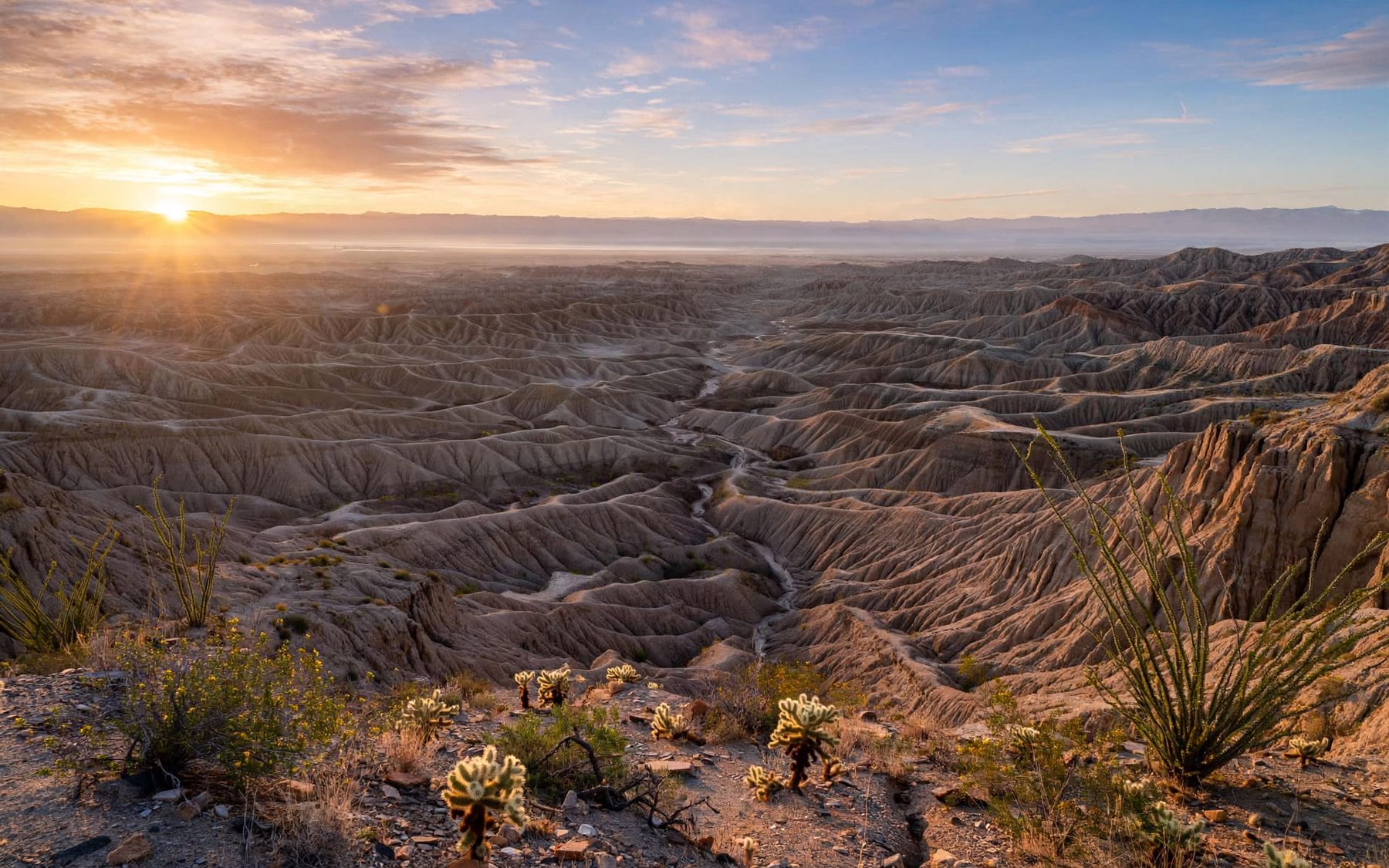
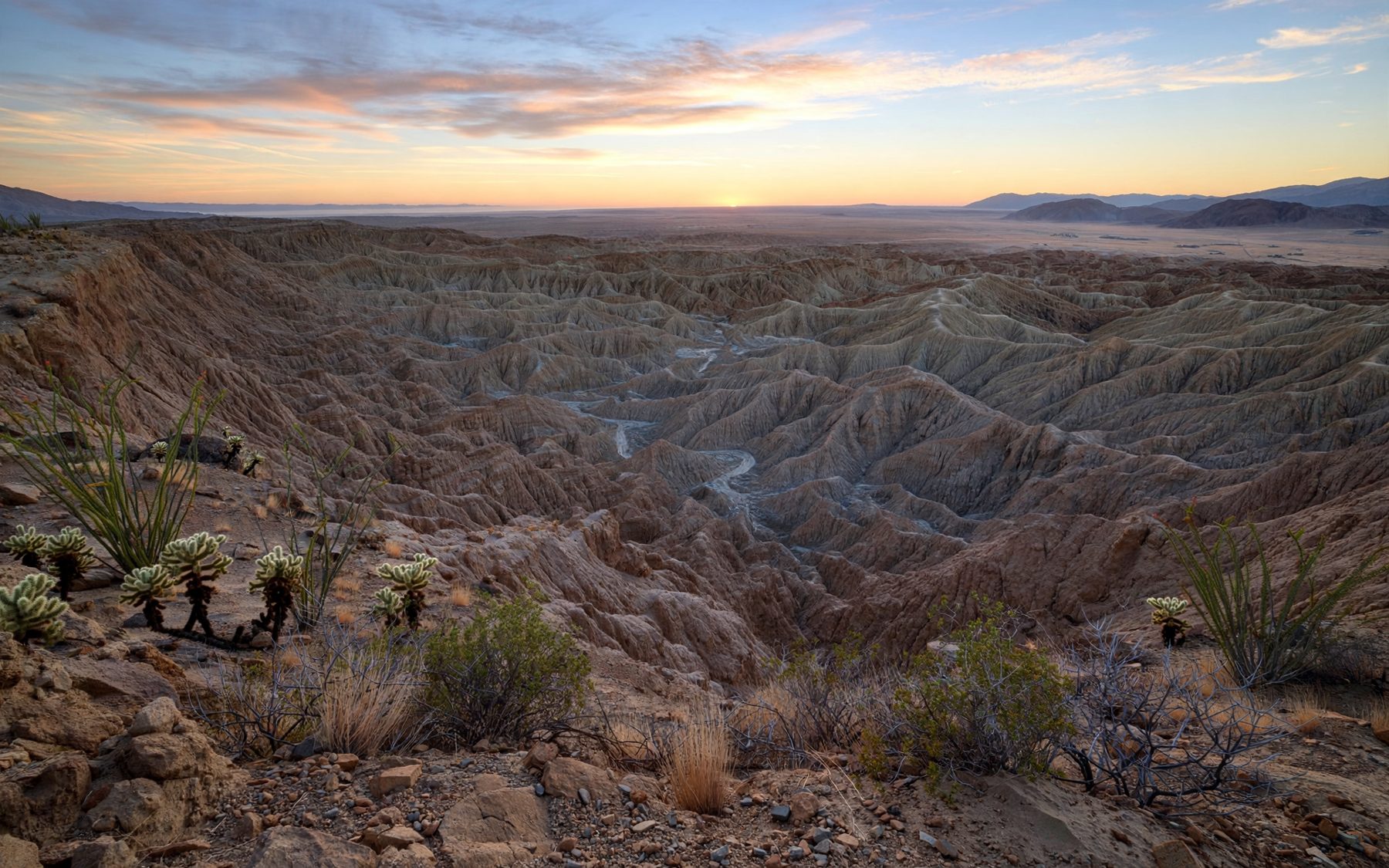
A sandy wash road from the Borrego Salton Seaway ends at a sudden edge above the Borrego Badlands. At sunrise the eroded ridges below fill with gold, shadow and a long silence.
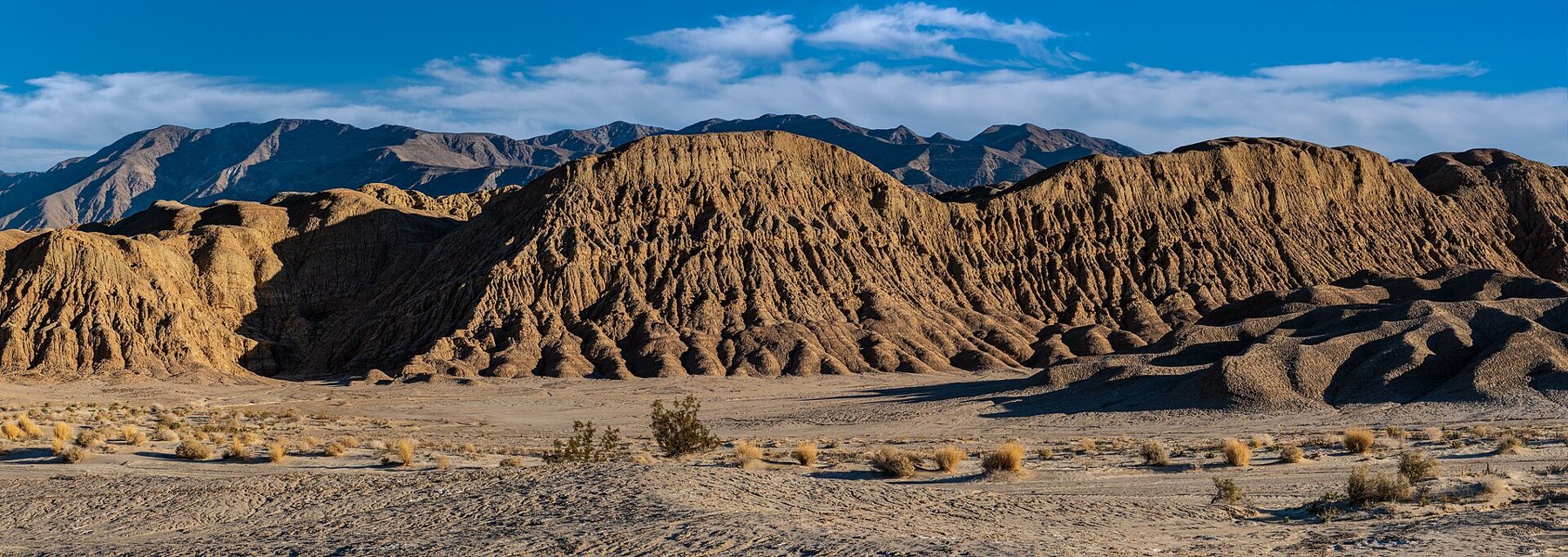
The road gives no warning. For miles you drive up a broad sandy wash between low hills, seeing nothing but gravel, creosote and the slope ahead. Then you park, walk a few yards up a gentle rise, and the ground simply stops. Below you, spread for miles to the south and west, lie the Borrego Badlands: a maze of bare ridges, gullies and pale mud hills, carved into folds by rare rain and constant wind.
Font's Point is the best-known viewpoint in Anza-Borrego Desert State Park, and sunrise is its finest hour. The overlook takes its name from Pedro Font, a Franciscan priest who kept a diary on the Spanish expedition led by Juan Bautista de Anza through this desert in the 1770s.
The wash road from S22
The turn-off for Font's Point is on County Route S22, the Borrego Salton Seaway, east of Borrego Springs. A signed dirt track leaves the highway to the south and follows Font's Point Wash for about four miles to a small parking area just below the overlook.
The wash is sand, not graded road, and its surface changes with every storm and every busy weekend. Some stretches are firm and packed; others are deep and soft. The park recommends four-wheel drive, and that is sound advice.
Which vehicles manage it
- High-clearance four-wheel drive: the right tool, especially after rain or wind has loosened the sand.
- All-wheel drive crossovers: often make it when the sand is firm, but can bog down in soft patches.
- Ordinary two-wheel-drive cars: sometimes get through in good conditions, but are the most likely to become stuck, and towing from the wash is slow and costly.
If you do drive in, keep a steady speed in the soft sand rather than stopping, follow existing tracks, and do not spin the wheels if you lose grip. Lowering tyre pressure helps in sand, but only if you can reinflate afterwards. Carry a shovel, water and a fully charged phone, and know that coverage is unreliable. Check conditions with the park visitor center before you go. If the wash looks soft at the start, you can walk in, though four miles each way on sand is a long hike in the dark.
Sunrise at the edge
Plan to reach the overlook before first light. Leave the parking area with a headlamp, walk the short slope to the edge, and find a place to sit well back from the drop. The sky pales first in the east, over the low desert toward the Salton Sea, then the sun rises and its low light rakes across the badlands from the side.
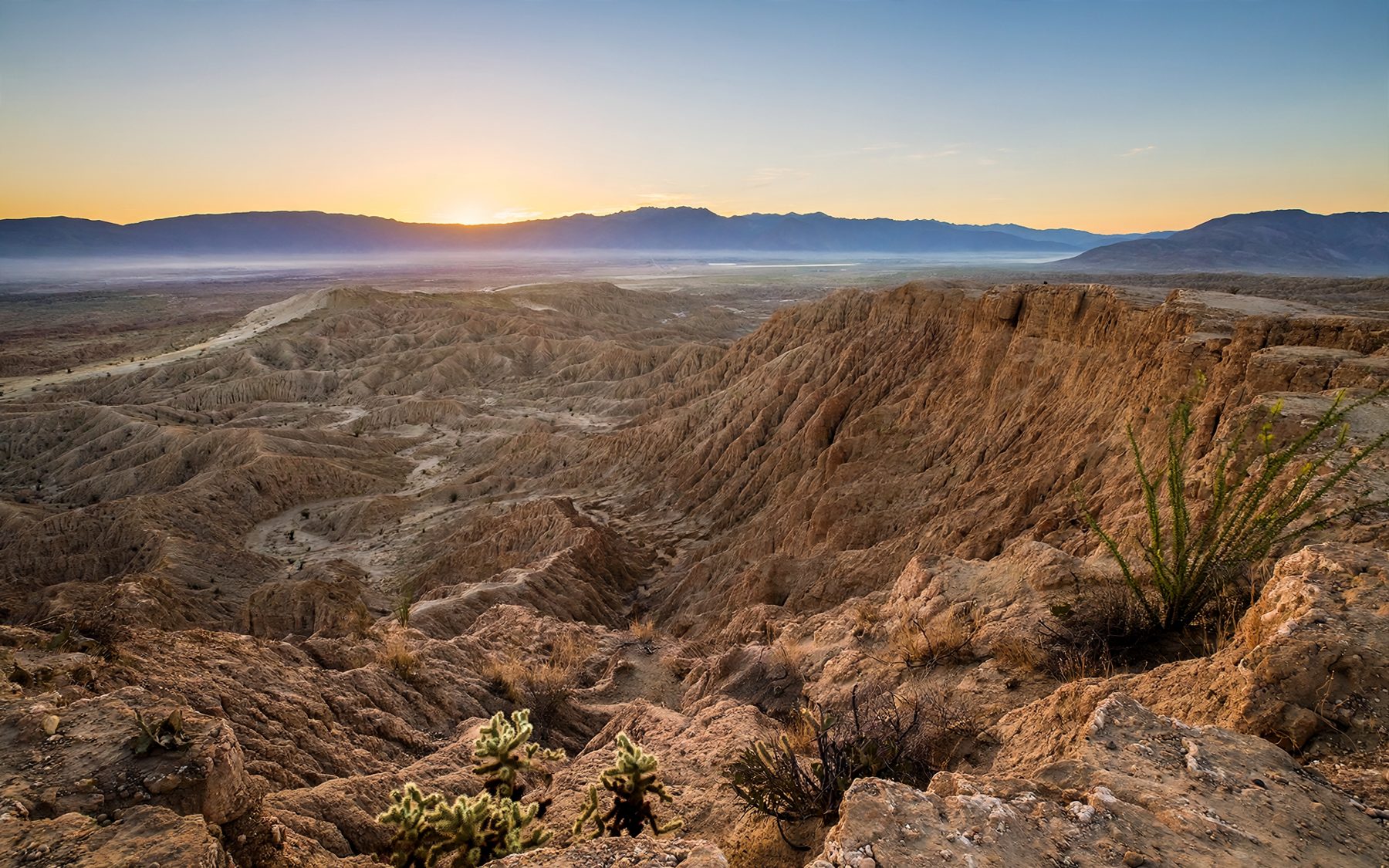
That side light is what makes the view. Each ridge throws a long shadow into the gully beside it, and the whole landscape turns into layers of gold and blue-grey that shift minute by minute. Beyond the badlands the Borrego Valley stretches toward the mountains on the far side, still in shadow as the sun climbs.
The best colour lasts only a short time. Within an hour or so the shadows shorten, the ridges flatten into a single pale tone, and the view becomes a bright, hard-edged map of erosion. Sunset reverses the effect from the west and is popular too; sunrise is quieter.
The best colour lasts only a short time.
 About 70 miles · Around 700 feetSideways through The Slot
An edge with no railing
The overlook is a natural edge on soft, crumbling mudstone and sandstone. There is no railing, no wall and no barrier, and the drop is long and steep. The rim can look solid and break under weight, especially after rain.
- Stay well back from the edge, particularly in the dark and in wind.
- Keep children within arm's reach and dogs on a short leash.
- Do not climb down into the badlands from the overlook.
- Walk slowly with a light before sunrise; the ground is uneven.
Never drive on the overlook itself or off the established parking area. The surface is fragile, and tracks scar it for years.
Ridges made of old lakes and rivers
The badlands below are young rock by geological standards. They are layers of mud, silt and sand laid down over millions of years by rivers, floodplains and lakes, when this part of the desert was far wetter and greener than it is now. Movement along the faults of the region later lifted and tilted those layers, and rain and wind began cutting them into the ridges you see.
Because the rock is so soft and has so little plant cover, it erodes quickly, and every rare storm reshapes the gullies a little more. The same layers hold a rich fossil record of animals that once lived here, from camels and horses to mammoths. Fossils in the park are protected; look, photograph and leave them in place.
Heat, cold and the right months
Font's Point swings between extremes. Winter mornings before sunrise can be close to freezing, with wind at the edge that makes it feel colder, so bring a warm layer even if the afternoon will be mild. By mid-morning the badlands reflect heat from every bare surface, and from late spring through early autumn temperatures in this part of the desert become dangerous.
The season for a sunrise visit runs roughly from November to March. In the hotter months, if you go at all, go only at dawn, drive out before the heat builds, and carry far more water than you expect to need. A breakdown or a stuck vehicle in the summer heat is a serious emergency.
Flash floods are a risk in the wash itself. Rain over the hills can send water down the channel with little warning, and storms can wash out the road. Do not drive the wash when rain is falling or forecast, and turn back if you see water flowing.
A morning in the badlands
Font's Point pairs well with other early-morning stops. Night skies here are among the darkest in Southern California, and an evening spent watching the stars from the dark nights of Borrego Springs can lead into a short sleep and a pre-dawn drive out to the overlook.
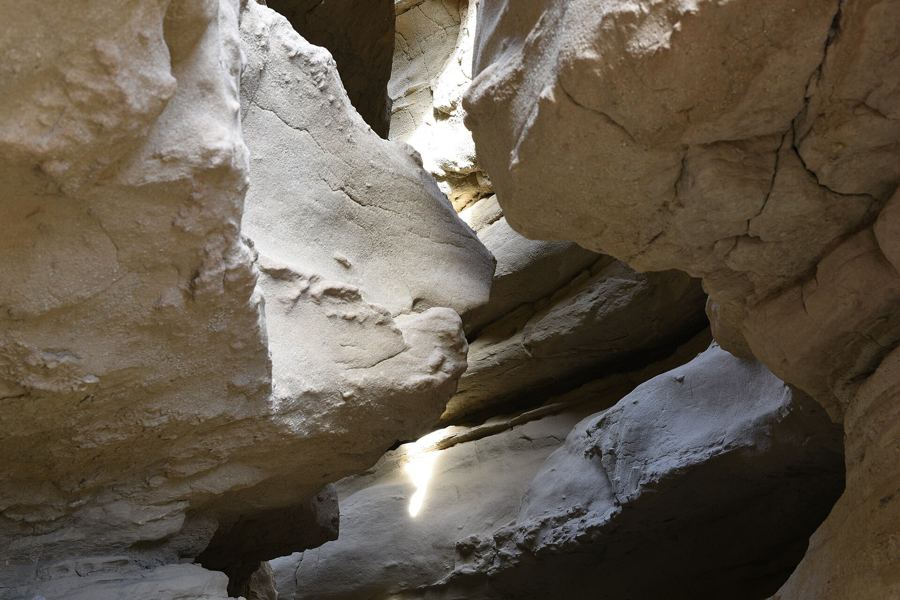
After sunrise, the narrow siltstone canyon at The Slot, off Highway 78 is a short drive south and works best before the heat builds. On the way back into town, the steel camels and mammoths of Galleta Meadows stand in the open desert, a reminder of the animals whose bones lie in the badlands you have just watched catch the light.
Fill the fuel tank in Borrego Springs before you leave, carry more water than seems reasonable, and let someone know your plans. Then go early, and give the edge the time it deserves.