About 70 milesUnder 1,500 feet · Borrego Springs
Palm Canyon and its desert fan palms
A rocky trail from the campground in Anza-Borrego Desert State Park leads up a canyon to a grove of California fan palms, the state's only native palm. Start early, carry water.
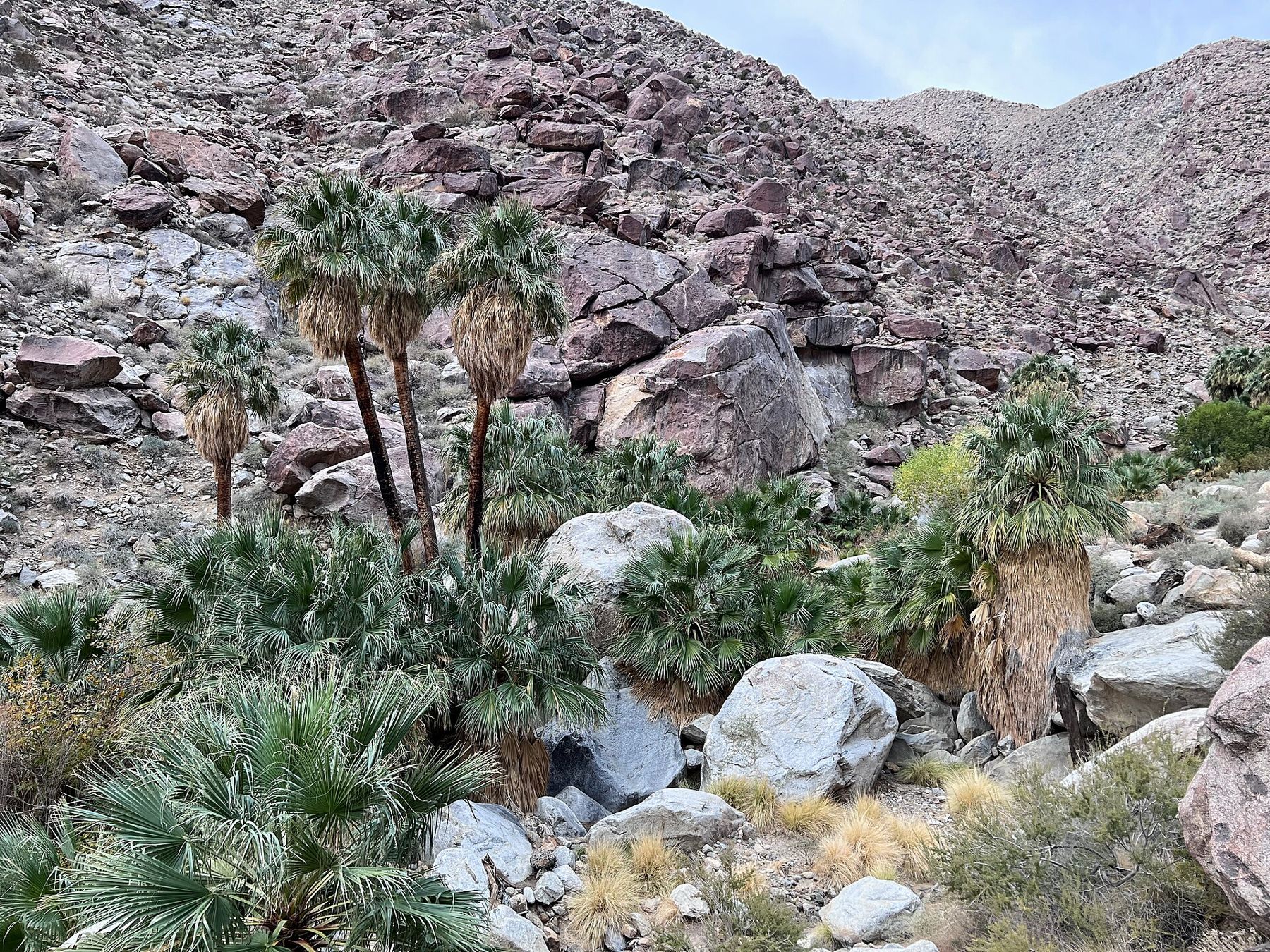
West of Borrego Springs, the San Ysidro Mountains rise steeply from the desert floor, and into them cuts a narrow canyon with water in it. Follow it upstream for a mile and a half and you come to a grove of tall palms with shaggy skirts of dead fronds, green against the bare rock. This is Borrego Palm Canyon, the best-known walk in Anza-Borrego Desert State Park, California's largest state park.
It is not a long hike, but it is a desert hike, and the desert sets the terms. Go early, go in the cool months and take a generous reserve of water, more than the walk seems to call for.
The only palm that belongs here
The trees in the grove are California fan palms, the only palm native to the state. They grow where water reaches the surface or runs close beneath it, usually along fault lines or in canyon bottoms, and they form oases scattered across the deserts of Southern California and northern Baja California. Borrego Palm Canyon holds one of the largest in the park.
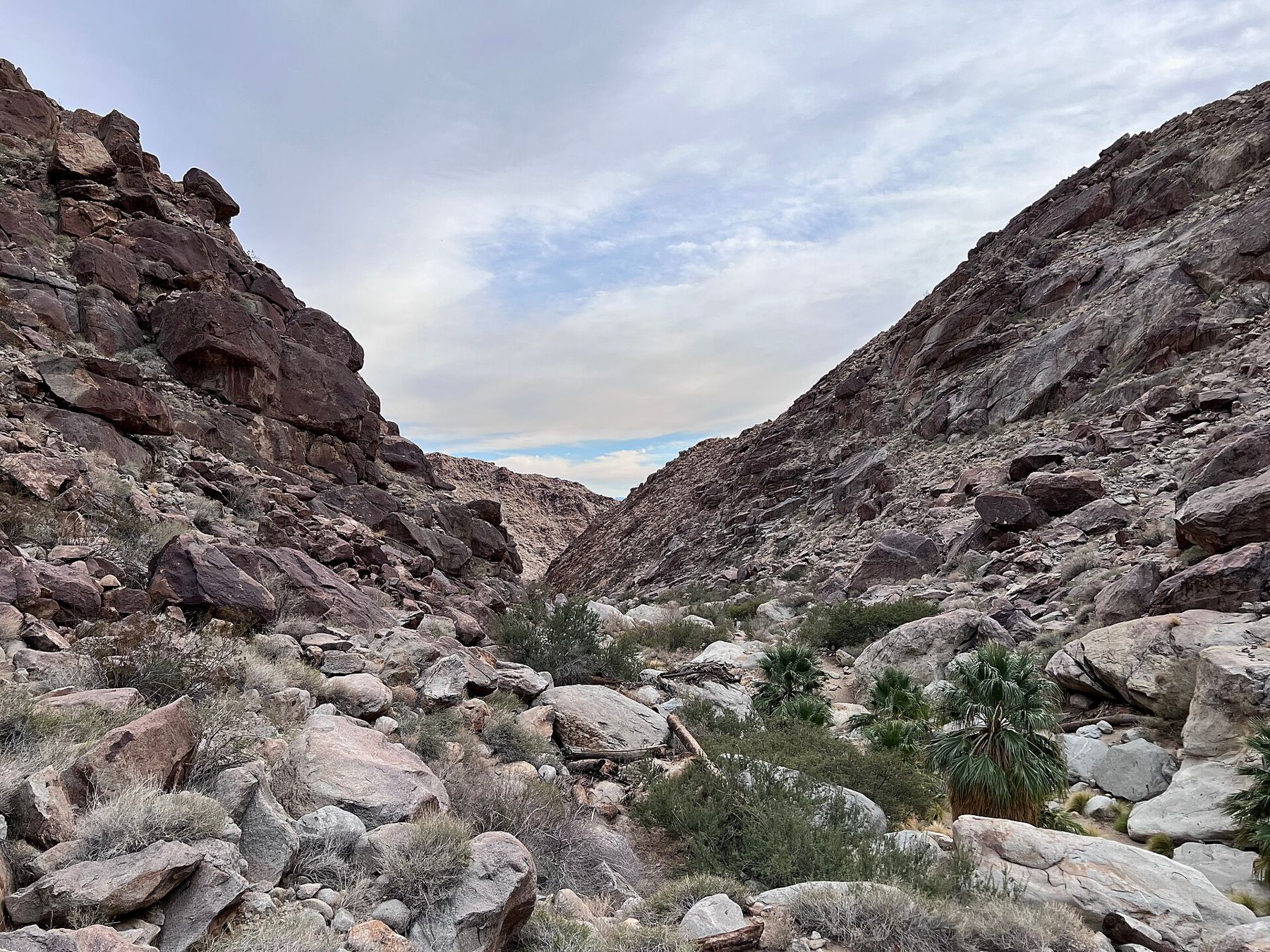
Left alone, a fan palm keeps its dead fronds, which hang down around the trunk in a thick, shaggy skirt. The skirt shelters birds, insects and small animals, and it burns readily. The palms have adapted to that: their growing point is deep inside the trunk, protected by fibers, so a palm can lose its fronds and blacken its trunk in a fire and still put out new leaves.
The walk up from the campground
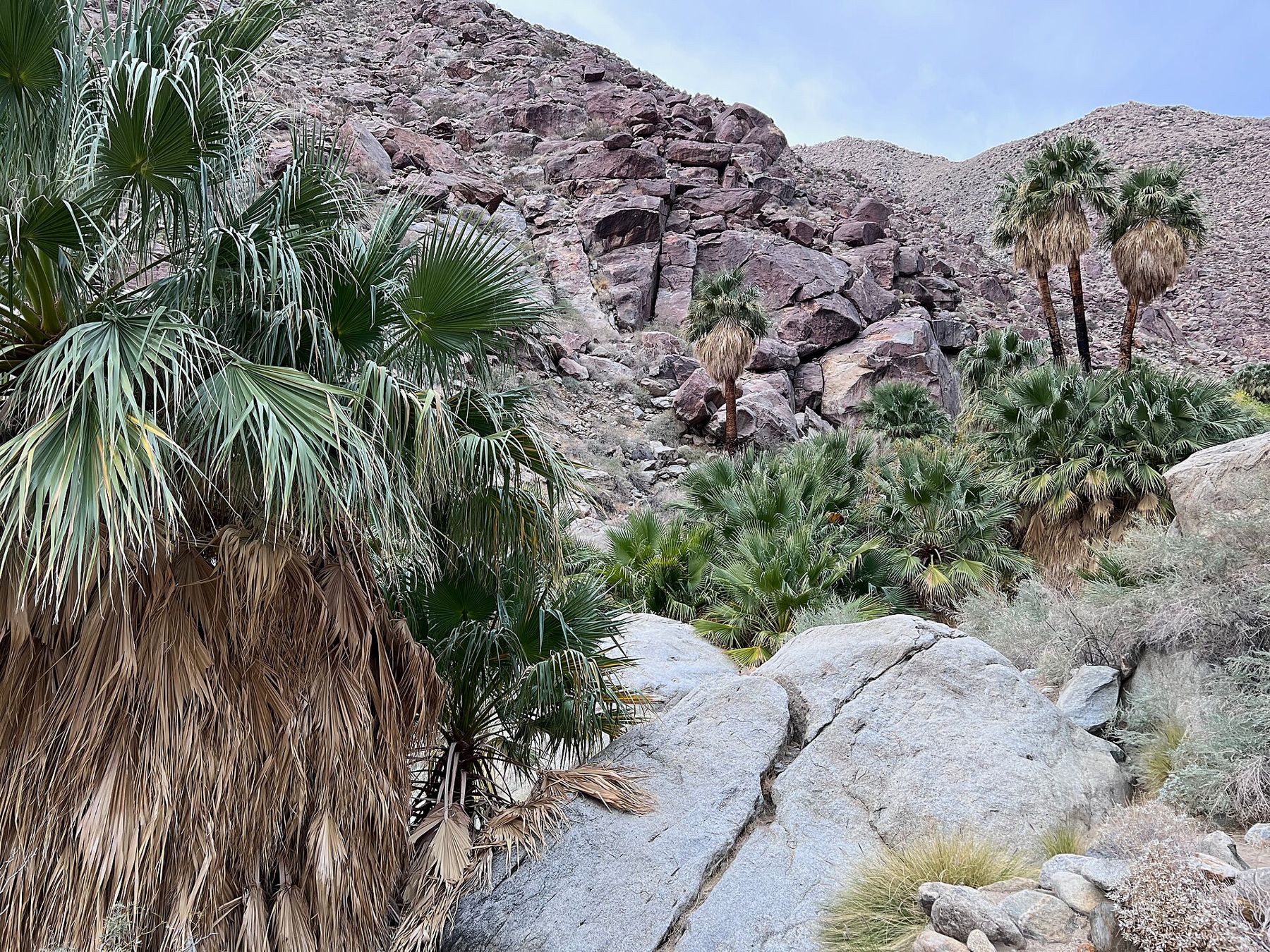
The trail starts at the upper end of Borrego Palm Canyon Campground, a short drive from Borrego Springs and close to the park's visitor center. It climbs gently up the canyon on a rocky path, crossing the wash and the small stream that runs in wetter seasons. It is roughly a mile and a half to the first grove, with a few hundred feet of climbing. An alternate trail on the way back follows the other side of the canyon.
- Most of the trail is in full sun, with no shade until the palms.
- The footing is uneven, with boulders and loose rock; wear sturdy shoes.
- Stream crossings can be wet after winter rains.
- Expect to pay a day-use or parking fee; amounts and rules change, so check before you go.
Give yourself more time than the distance suggests. Most people take two to three hours for the round trip, with a long rest in the shade of the palms, and the boulder hopping near the grove slows everyone down. Small children manage the first stretch easily but may need help over the rocks further up. The trail is popular in the cool months, and on weekends the campground car park can fill by mid-morning, another reason to start early.
Look at the ground as well as the views. The wash is lined with smooth granite boulders carried down by past floods, and in places you can see how high the water has reached by the debris caught in shrubs well above the stream.
In the canyon, plants change as you climb. Creosote and ocotillo give way to brittlebush, and near water, desert willow and mesquite appear. In a good spring the slopes carry wildflowers, though bloom years are irregular; the story of wildflower years in the Anza-Borrego desert explains why.
 About 70 miles · Around 600 feetDark nights in Borrego Springs
Watching for bighorn sheep
The park is named partly for them: borrego is Spanish for a young sheep. Peninsular bighorn sheep live in the rocky mountains around the Borrego Valley, and Palm Canyon is one of the places where visitors most often see them, usually high on the slopes above the trail. They are well camouflaged against the rock, so movement or the click of a hoof on stone is often the first sign.
The sheep come down to water, especially in the hot months, and they are sensitive to disturbance. Keep your distance, keep your voice down, and never approach or follow them. Dogs are not allowed on the trail, partly for their sake.
The best chances come early and late in the day, when it is cooler. Binoculars make a big difference.
Heat, water and flash floods
Heat is the main danger. From late spring to early autumn, temperatures in the canyon often climb well above 100 degrees by mid-morning, and rescues are not uncommon. Even in winter, the sun is strong and the air is dry. Carry plenty of water, drink it as you go, and turn back when you have used half of it.
Carry plenty of water, drink it as you go, and turn back when you have used half of it.
Flash floods are the other. Storms in the mountains, even miles away, can send a wall of water and debris down the canyon with little warning. Floods have scoured this canyon more than once, moving boulders and uprooting palms. Do not enter the canyon if rain is forecast or thunderstorms are building over the mountains, and if you see water rising or hear a roar upstream, climb to high ground immediately.
Check the forecast, the park's current alerts and the trail's status before you go. Parts of the trail and campground may close after storms or in extreme heat.
Fire in the grove
In the early 2020s, a fire swept through the palm grove in Borrego Palm Canyon. The skirts of dead fronds burned, and many trunks were left black. Fire has reached desert palm oases before, both from natural causes and from people, and the trees are built to survive it.
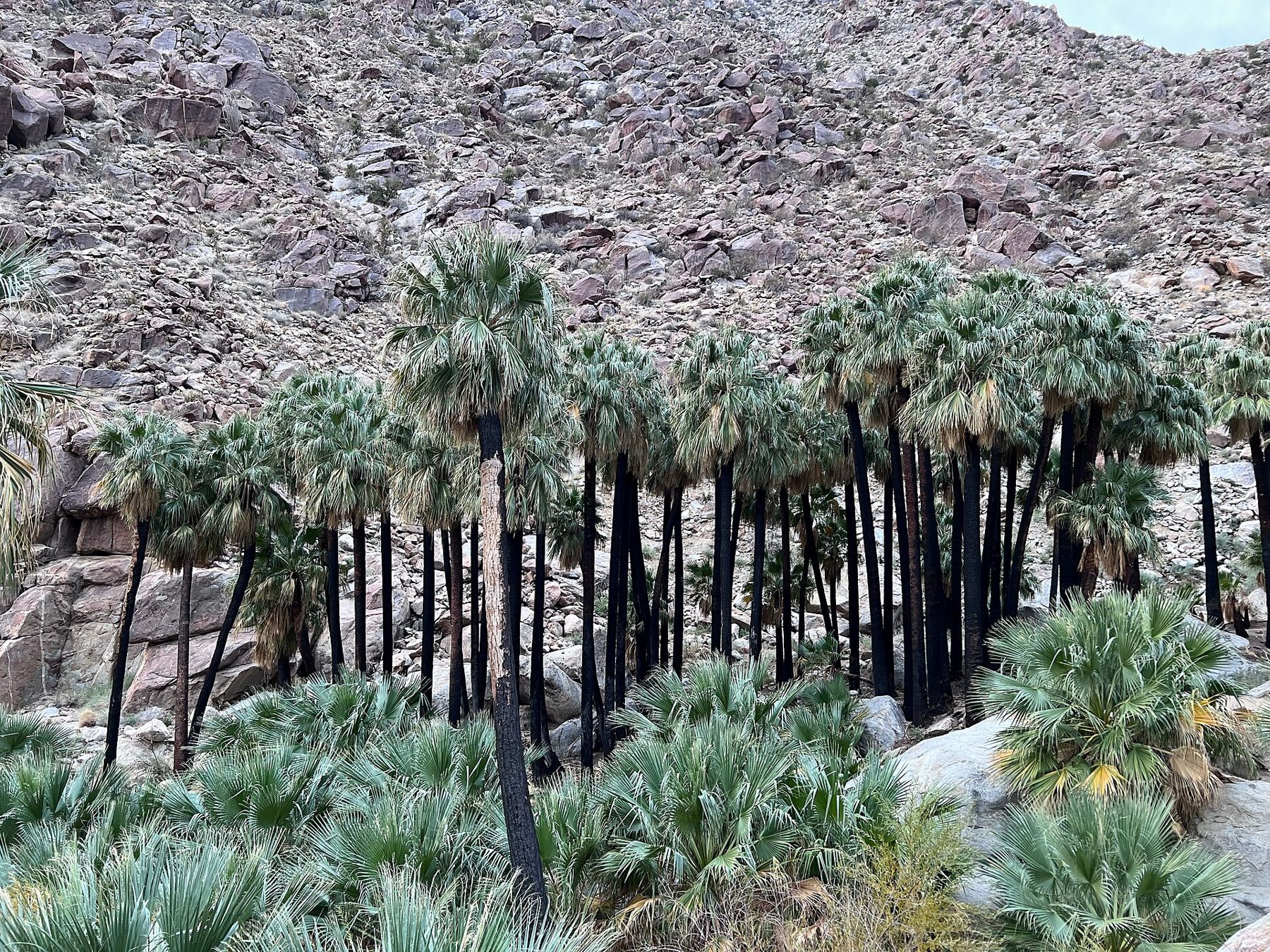
Today, many of the burned palms have put out new green crowns above blackened trunks, and young palms are growing among them. The grove looks different from the old photographs, with bare dark columns instead of shaggy skirts, but it is very much alive. Fires are never allowed on the trail or in the grove; check the park's current rules on smoking and stoves before you go.
The rest of the desert
Palm Canyon fits easily into a day in Borrego Springs. Afterward, you might look for the large metal animals scattered across the open land around town, told in the metal animals of Galleta Meadows, or head east toward the Badlands for the view at Font's Point. If you plan to stay after dark, the night sky here is some of the clearest in Southern California.
The park's visitor center near the campground is worth a stop before or after the walk. It has exhibits on the desert's plants, animals and people, including the Cahuilla and Kumeyaay, who lived in and around these canyons and used the palms for food, fibre and building. Rangers there can tell you about current trail conditions and recent sheep sightings. Its opening days change with the season, so check before you go.
Whatever you do, plan around the heat. The cool months, from roughly November to March, are the time to come. Start at first light, carry water and check conditions before you set out.