About 45 milesAround 4,200 feet · Julian
Gold, granite and a mountain Main Street
Julian grew almost overnight after gold turned up in a creek in the winter of 1869 to 1870. Its wooden blocks, hillside cemetery and old mine tunnels still tell that story.
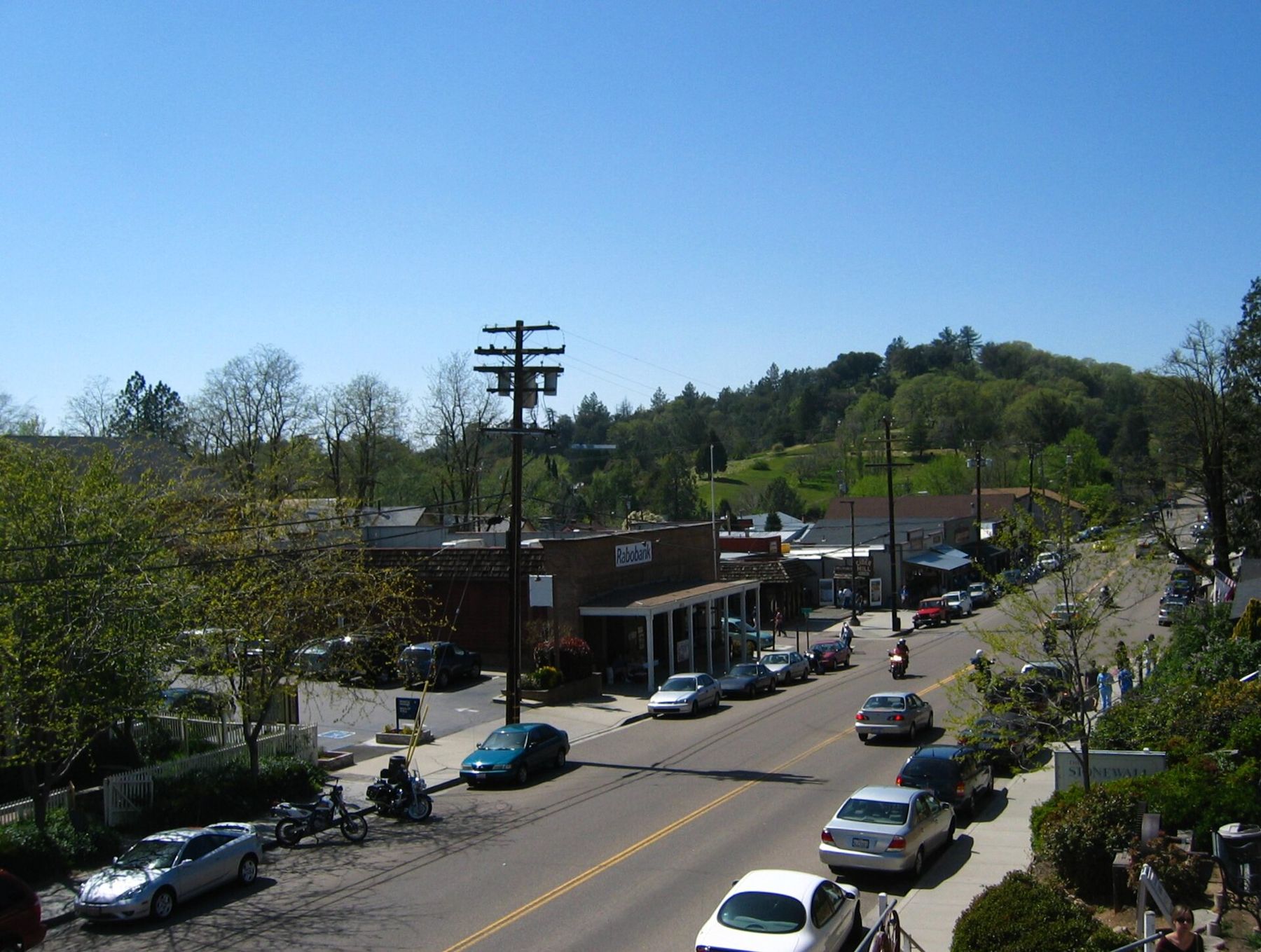
Julian is a small town at a crossroads in the mountains, where Highways 78 and 79 meet among oaks and pines at about 4,200 feet. Today most people come for the air, the autumn colour and the apples. But the reason the town exists at all is gold, found here in the winter of 1869 to 1870, and the story of that rush is still written into its streets.
The historic centre is compact enough to walk in an hour, longer if you stop to read the plaques. Most of what you need to see sits within a few blocks of Main Street.
A creek, a discovery and a rush
Before any miners arrived, these hills were Kumeyaay country. Kumeyaay families moved between the desert and the mountains with the seasons, gathering acorns from the oaks around what is now Julian and trading across the region. Their presence here long predates the town, and their descendants live in the county today.
After the Civil War, settlers began to arrive from the east. Among them were Drury Bailey and his cousins Mike and Webb Julian, who came from Georgia and took up land in the valley. The town would later take Mike Julian's name.
The discovery that changed everything is credited to A. E. "Fred" Coleman, a Black man and former slave who had mining experience from the northern goldfields. Watering his horse in a creek north of the present town, he noticed flakes of gold in the gravel. Placer mining followed along what became Coleman Creek, and a mining district was organised in his name.
Early in 1870 prospectors found gold in quartz veins in the hills, and hardrock mining began. Within months a camp of tents and rough cabins had grown into a town with stores, saloons and a hotel, and people arrived on foot, on horseback and by wagon from the coast.
Julian was built by people from many places, and the town's own story is fuller for remembering all of them.
Main Street, one block at a time
Start at the crossroads where the two highways meet and walk Main Street slowly. Many of the buildings date from the late 1800s and early 1900s: wooden false fronts, deep porches, brick walls and tin roofs. Several carry painted names and dates on their facades, and the town was registered as a California Historical Landmark for this cluster of early buildings.

The Town Hall
The Julian Town Hall, built in 1913, stands near the centre of Main Street. It has served for more than a century as the town's meeting place, polling station and community hall, and it still hosts local events.
Step off Main Street onto the side streets and the town quickly turns residential: small wooden houses with porches, stone walls, old fruit trees and lilacs planted by early families. Walk them quietly; most are private homes. In winter, a light snowfall turns these streets into the scene that brings visitors up from the coast on cold weekends, and the pavements can be icy in the shade until late morning.
The pioneer museum
A short walk off Main Street, the Julian Pioneer Museum is housed in an early building and holds a collection of tools, clothing, photographs and household goods from the mining years and the farming decades that followed. Opening days and hours are limited and change through the year, so check before you go.
Black pioneers in the town's story
Fred Coleman was not the only Black pioneer to shape Julian. Albert and Margaret Robinson, a formerly enslaved man and his wife, ran a bakery and restaurant in town and in the 1890s built a hotel on Main Street that still stands. Julian was built by people from many places, and the town's own story is fuller for remembering all of them.
 About 45 miles · Around 4,000 feetWhen the orchards turn red
Below ground: the old mines
The hardrock mines around Julian were small by the standards of the great California goldfields, but for a couple of decades they kept the town busy. Miners followed quartz veins into the granite with hand drills and blasting powder, hauling ore out by cart for crushing in stamp mills. The richest mine in the area was not in Julian at all but at Stonewall, a few miles south, where traces of the old workings sit below Stonewall Peak in Cuyamaca Rancho State Park.
By the end of the 1800s most of the easy gold was gone and the mines closed one by one. A few old tunnels at the edge of town are open for guided walks, and they give a clear sense of how cramped, dark and cold the work was. Tour days, times and age limits vary, so check before you go. Never enter an abandoned mine on your own; old shafts and tunnels collapse, flood and hold bad air.
The cemetery on the hill
The Julian Pioneer Cemetery climbs a steep hillside just above Main Street, reached by a long flight of steps. It is one of the quietest and most moving places in town. Headstones and wooden markers date back to the early mining years, some carved, some plain, many weathered beyond reading. Families of miners, farmers and shopkeepers lie side by side under oaks and cedars.
Walk the paths slowly, stay on them, and treat the place as the working cemetery it is. Morning is the best time: the light comes through the trees from the east and the town below is still waking up.

From gold to apples, and visiting today
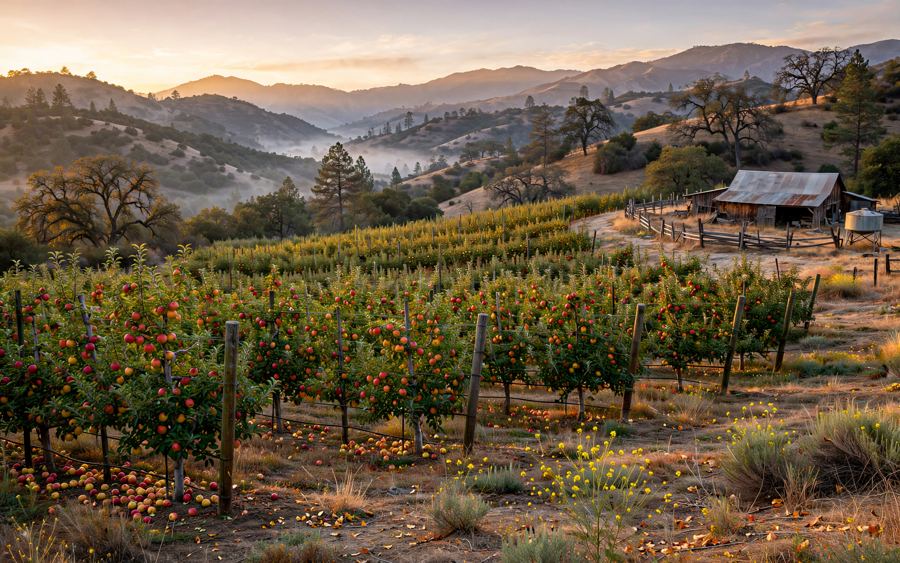
When the gold faded, Julian did not empty out as so many mining towns did. Settlers had already planted orchards, and the cold winters and warm summers suited apples. Farming carried the town into the twentieth century, and the orchards are still the reason for the crowds in autumn; the season has its own chapter in apple season in the hills around Julian.
Fire has marked the area too. The 2003 Cedar Fire burned through forest and homes in the hills nearby, and later fires have threatened the town. Burned slopes are visible on the drives in, slowly greening.
Julian sits at the meeting of Highway 78, which climbs from Ramona and drops east toward the desert, and Highway 79, which runs south toward Cuyamaca. Both are winding two-lane roads. In winter, snow and ice close or slow them at times, and chains may be required; check road conditions before setting out. On autumn weekends traffic and parking in the centre are heavy, so a weekday or an early start makes the walk far more pleasant.
Give yourself time to keep going. A climb up Volcan Mountain north of town shows the whole Julian valley laid out below, the same hills the first prospectors walked, with the desert stretching east beyond them.