About 60 milesAround 600 feet · Borrego Springs
When the desert decides to bloom
Most springs in the Anza-Borrego desert are quiet. A few, after the right rain at the right time, turn the valley floor yellow, purple and white. How to read the signs.
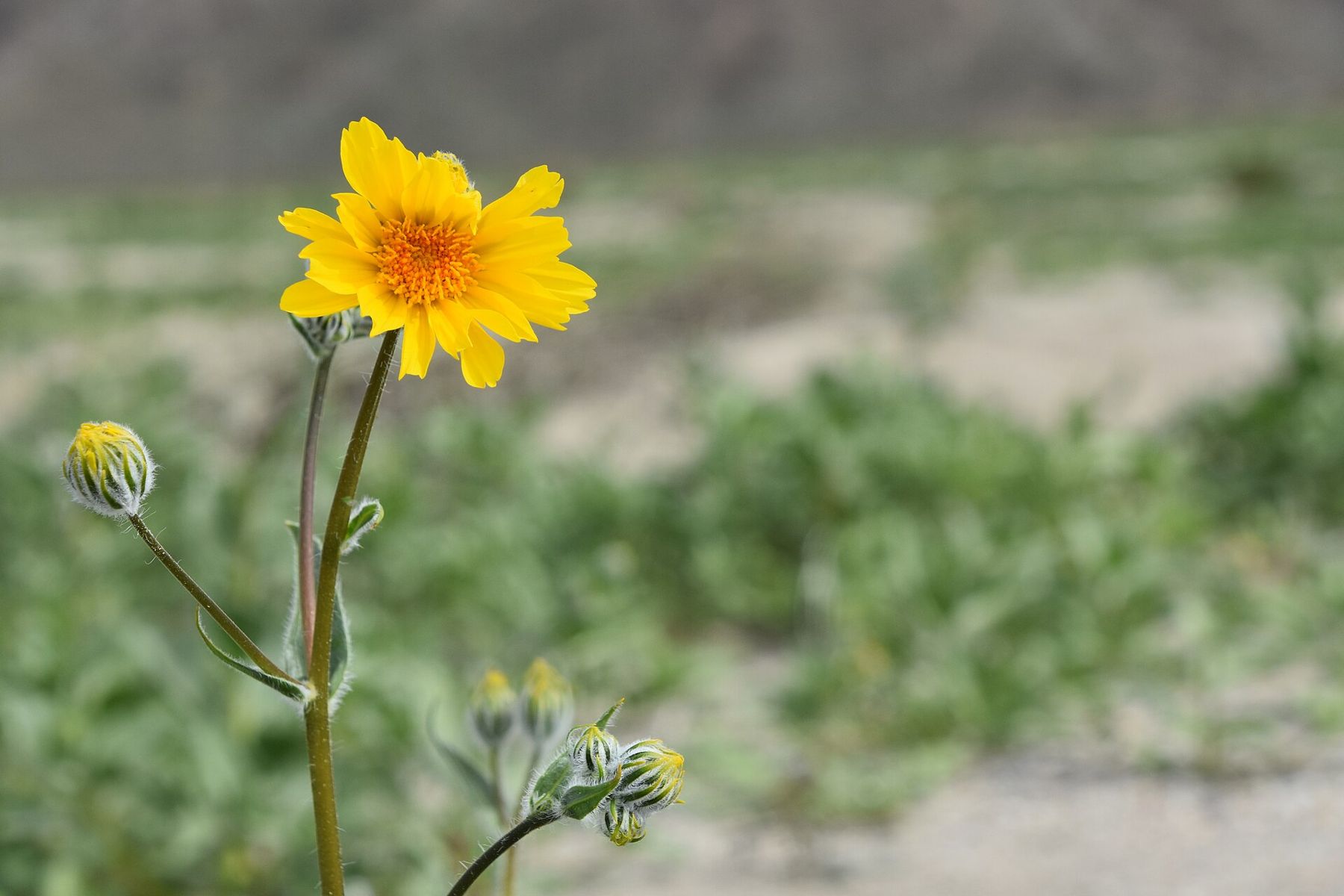
The desert around Borrego Springs looks brown and grey for most of the year: creosote, burrobush, bare gravel and pale sand. Then, in some springs, the ground between the shrubs fills with colour. Yellow sunflowers run along the roadsides, purple sand verbena spreads across the dunes, white desert lilies stand up out of bare sand, and the tall stems of ocotillo tip themselves in red.
These are the wildflower years, and they are not predictable. Many springs bring only scattered blooms. A handful in a decade produce the kind of show that fills the roads and the news. Knowing why helps you decide when to make the drive.
Rain at the right time, not just rain
Desert annuals spend most of their lives as seeds lying in the soil, sometimes for many years. They wait for a signal, and the signal is not simply a wet winter. What matters is timing and spacing.
- A soaking rain in autumn or early winter, usually from late October to December, wakes the seeds and starts germination.
- Follow-up rains through winter keep the young plants alive while their roots grow.
- Mild temperatures without hard frost let them grow steadily.
- No early heat and no strong drying winds in February and March, when the plants are ready to flower.
Miss one of these and the bloom falls short. A single huge storm can run off the hard ground without soaking in. A warm, windy spell in late winter can wither a promising crop in a week. That is why two winters with similar totals can produce very different springs.
Reading the signs from a distance
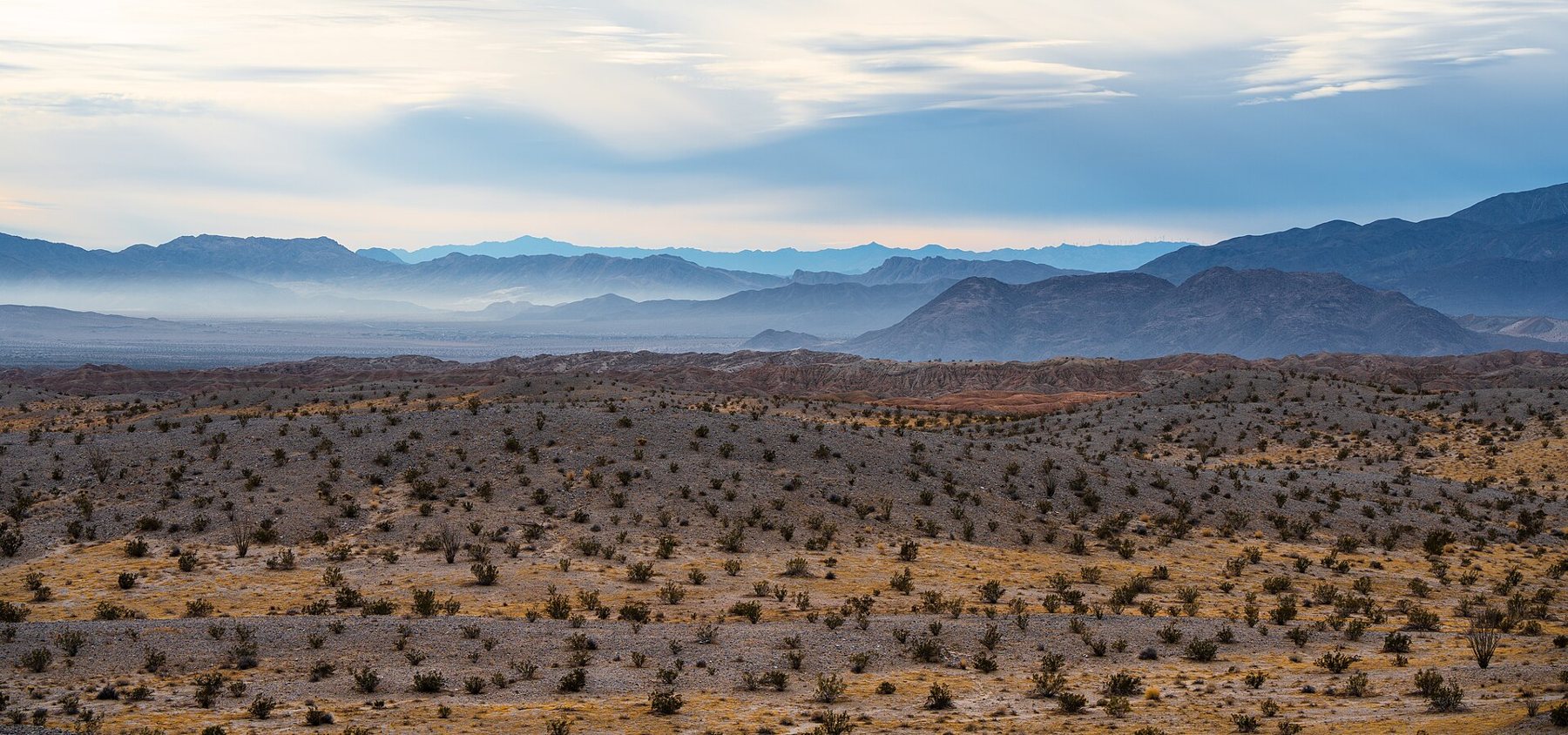
By January you can usually tell whether a year has promise. Look for news of a good soaking rain the previous autumn and steady storms after it. A green tinge on the valley floor in winter, when tiny rosettes of leaves cover the sand, is the best sign of all.
The state park and the visitor center in Borrego Springs share bloom updates through the season, and they are the most reliable guide to what is open where. Check them before you go rather than relying on photographs from earlier years, because the timing shifts from spring to spring by several weeks.
In most years the lower valley floor blooms first, often from late February, and the higher slopes and canyons follow into April. Cacti such as beavertail and barrel cactus tend to flower later than the annuals.
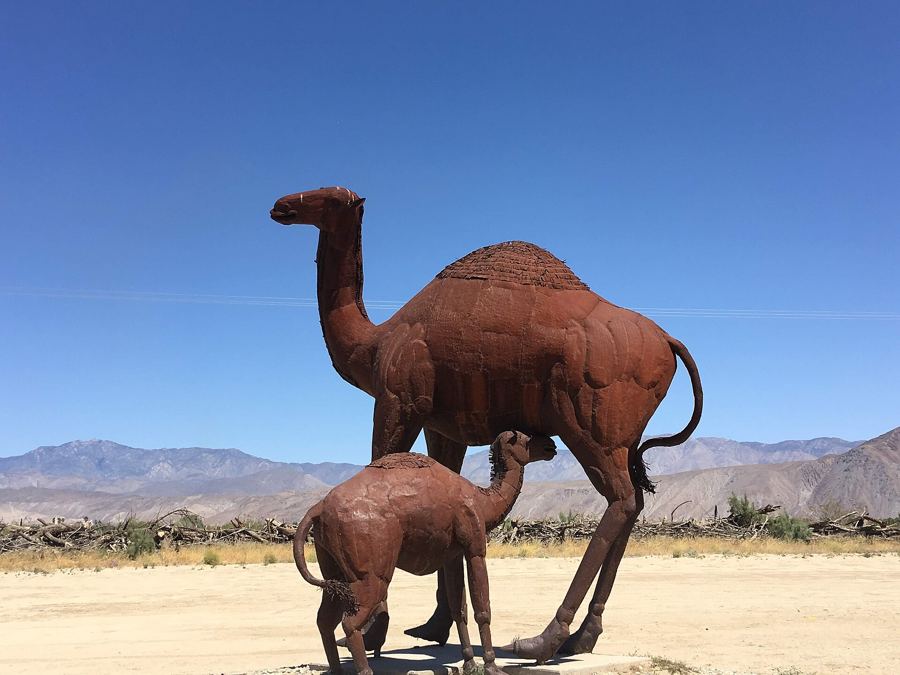 About 60 miles · Around 600 feetRust-red animals on the Borrego plain
The flowers worth learning
A few plants define a good year here, and they are easy to recognise once you know them.
Desert lily
Tall, white and trumpet-shaped, the desert lily grows from a bulb buried deep in sandy ground. In a dry year it does not appear at all. In a wet one its pale flowers stand above a rosette of wavy leaves, often in the sandy flats east and north of town.
Desert sand verbena
Low purple clusters that spread across sandy ground and dunes, often mixed with the white of dune evening primrose. In big years the pairing covers whole fields and scents the air in the evening.
Desert sunflower and brittlebush
Much of the yellow you see comes from these two. The desert sunflower is an annual with single bright heads on thin stems; brittlebush is a rounded shrub with grey leaves that blooms even in moderate years.
Ocotillo
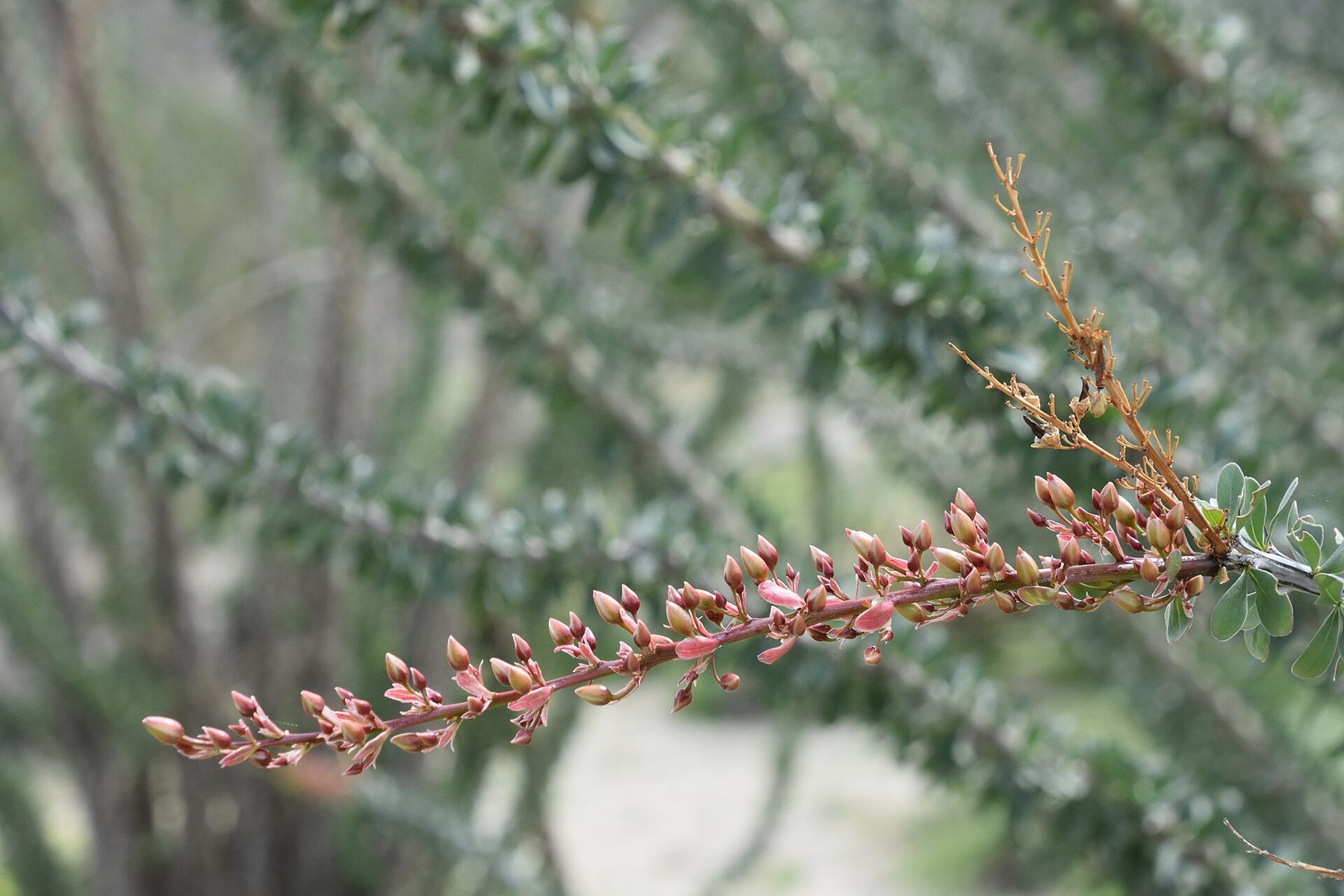
Ocotillo is not a cactus, though it looks like a bundle of thorny sticks. After rain it puts out small green leaves within days, then drops them when the ground dries. In spring each stem ends in a spike of red tubular flowers that hummingbirds visit.
Keeping the bloom alive
A wildflower field in the desert is fragile in a way that is easy to miss. The plants are small, the ground between them holds next year's seeds, and the crust on the soil takes years to recover once broken. Footprints and tyre tracks left in a bloom year remain visible long after.
- Stay on roads, established trails and paths that others have clearly used.
- Never drive or park on open ground, even to reach a better patch.
- Do not pick flowers or dig plants; collecting is not allowed in the state park.
- For photographs, choose a spot from the path rather than walking into the flowers.
Big years bring big crowds
When a strong bloom is announced, the valley changes. Borrego Springs is a small town with few roads in, and in the biggest recent years traffic backed up for miles on the two-lane highways, parking ran out along popular roads, and services in town were stretched. Weekends are the worst.
If you can, go on a weekday and arrive early. Start with roads further from the centre of town, carry all the food and water you need for the day, and fill the tank before you drop into the valley. Have a second destination in mind in case the first is full: a quiet trail, or a drive out to the overlook at Font's Point where the badlands sometimes carry their own scattered colour.
Heat comes sooner than the flowers expect
Spring in the desert is short. A cool morning in March can turn hot by early afternoon, and by April midday temperatures in the valley are often well above what most visitors expect. There is little shade on the flats.
Carry plenty of water, more than you think you will drink, and wear a hat and closed shoes; spines and stickers lie hidden among the flowers. Bees and other insects are busy in a good bloom, and rattlesnakes are active once the days warm. Look before you reach onto a ledge or step over a rock.
Even a modest year rewards a visit. A few desert lilies standing alone in the sand, or a hillside of ocotillo in red bloom, can be as memorable as a crowded field. Combine the drive with an early walk in Palm Canyon and a slow loop past the steel sculptures, and the day holds plenty even if the flowers are thin.